
I is for Indusrial Heritage Attractions
The Industrial Revolution in Britain was possibly one of the greatest steps ever taken in human evolution. It changed the realm out of all recognition and made way for the steady industrialisation of Europe and America and then the rest of the world followed. The Industrial Revolution, which took place between 1750 - 1900, was a period of great change in Britain.
There were huge technological advances which had an impact on every aspect of life. These technological advances were happening while the British Empire was growing not all changes were beneficial conditions in factories and coal mines were dangerous and difficult places to work in. However, today we celebrate our industrial past with dedicated museums and attractions who open their doors to visitors wishing to get a glimpse of the past.
Spinning & Silk Museums
Coldharbour Mil is a 200-year-old spinning mill set in a tranquil Devon village. Built by Thomas Fox to spin woollen and later worsted yarns in 1799, Coldharbour Mill is a rare surviving example of Georgian architecture, industry and enterprise. Since reopening as a museum in 1982 the mill has continued to produce high quality worsted knitting yarn on its period machinery. Take a fascinating factory tour to understand how the hand processes of spinning and weaving are performed on machines and the role of Thomas Fox in bringing these new inventions into the South West.
Whitchurch Silk Mill: A Living Legacy of Britain's Textile Heritage
Whitchurch Silk Mill is a gem of industrial heritage located on the picturesque banks of the River Test. As the oldest silk mill in the UK still operating in its original building, it offers visitors a unique glimpse into Britain's industrial past.
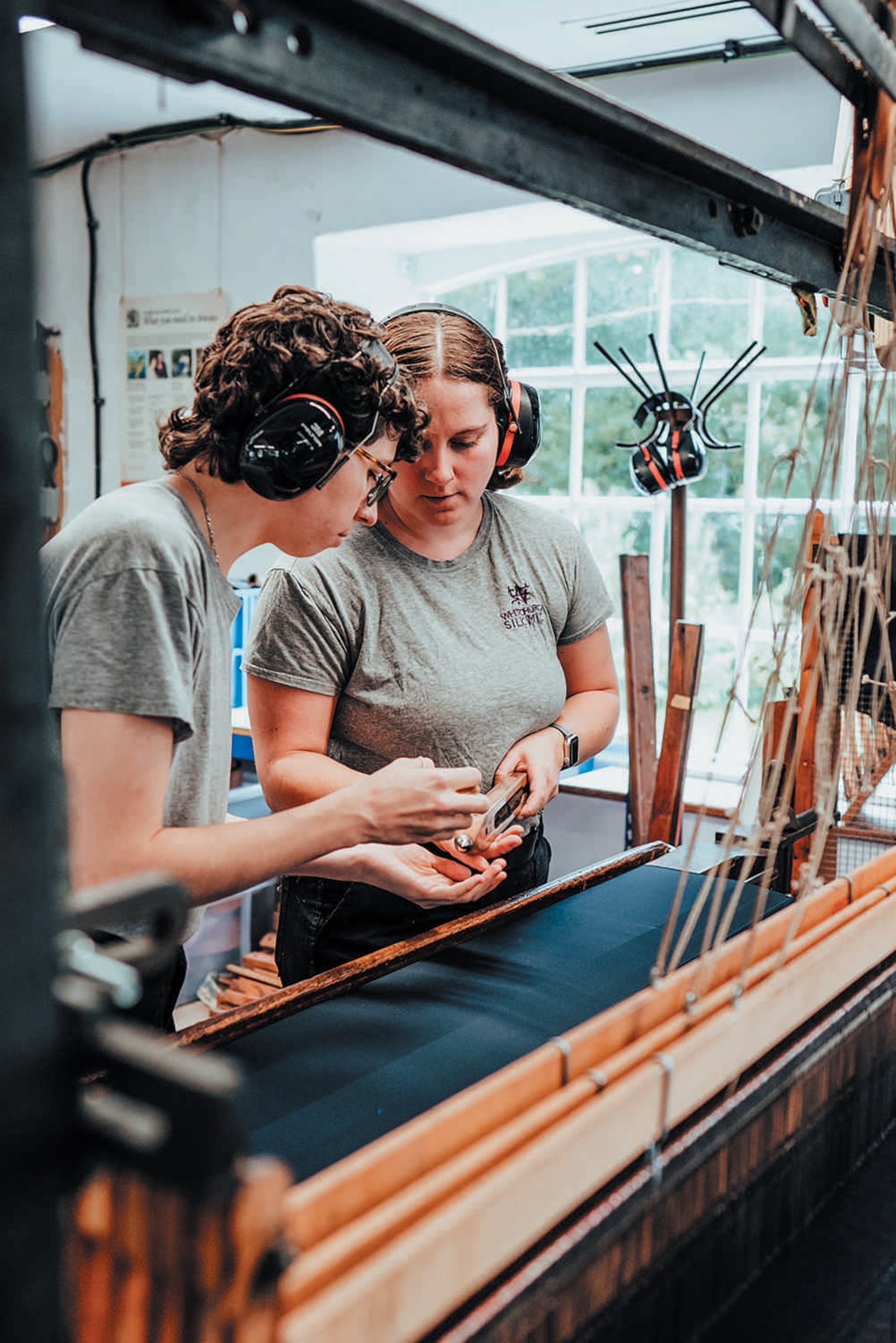
Today, the Mill operates as a working museum and visitors have the chance to see Weaver Tacklers wind, warp and weave beautiful artisan cloth using traditional heritage techniques and a collection of historic machinery. One of the Mill's most captivating features is Hampshire's last working waterwheel; a striking piece of engineering that once powered the entire mill. Today, it remains the beating heart of the visitor experience. The Mill has an interesting history of well-known clients and fascinating stories. When Burberry began its journey in nearby Basingstoke, Whitchurch Silk Mill wove the silk linings for its iconic trench coats, weaving 22 distinct colours between 1920 and 1950.
During WWII, the Mill produced raw organza silk for insulation cables, and in 1980, wound silk bobbins used for Princess Diana's wedding dress; a testament to its enduring legacy in British fashion and history.
Copyright © Discover Britain's A to Z Guide of Group Attractions, 2026. All Rights Reserved.